Creating a workplace that adapts with its people
#ServiceHub #ExperienceFeedback
The big reveal is in:

#ServiceHub #ExperienceFeedback
As one of the Nordics' largest financial institutions prepared to open a new flagship building, expectations were high. The space was designed to reflect a bold vision for the future of work—open, flexible, and people-centered. But leadership were clear that even the most beautifully designed environments only succeed when the daily experience lives up to the promise.
In partnership with us, we set out to answer a vital question: how might we ensure this workplace not only looks exceptional—but feels exceptional, every day?
The clear ambition wasn’t just to deliver service—it was to tune into the nuances of experience across a new, high-performance space, and act on what mattered most to the people moving through it.
This shift sparked a broader exploration: what if service wasn’t just planned, but activated? Not as a reaction, but as a built-in capability.

Turning Impressions Into Action
From the start, it was clear that traditional feedback models wouldn’t be enough. Sporadic surveys and generalized input wouldn’t capture what actually matters in the dynamic, ambitious workspace. The need wasn’t more data—it was more immediacy.
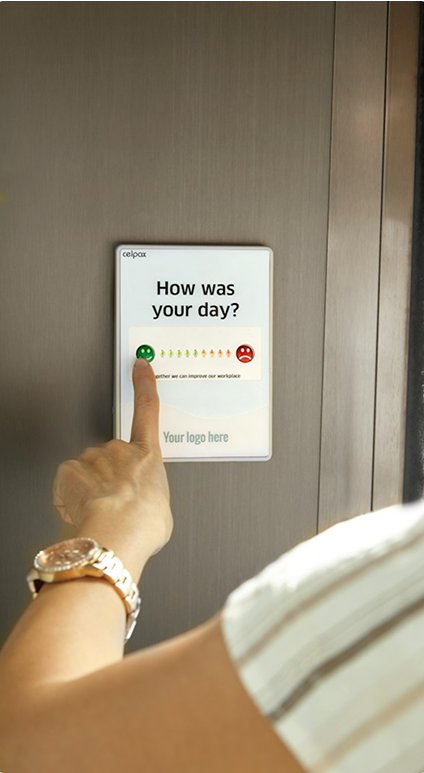
The solution was to create simple, frictionless ways for employees and guests to share how things were working—or not—while they were still in the moment. Feedback became a quiet, continuous conversation between the employees using the space and the teams supporting it.
Over time, the feedback revealed insights that would have otherwise gone unnoticed—early signs of friction, patterns in expectations, moments of delight. It became possible to act on what mattered, before it escalated or faded into silence.
In this new environment, responsiveness became a service standard. Small issues were flagged and addressed with care. Positive feedback reinforced what was working. Teams no longer had to wait for complaints—they could move with the rhythm of the building itself.
What made the approach distinctive wasn’t a single system or dashboard, but the mindset behind it: that experience is something to be listened to continuously, not audited periodically.
The feedback wasn’t an evaluation—it was an opportunity. A way to refine, adjust, and quietly elevate the experience for everyone who moved through the space.
Creating a Workplace That Listens
The initiative gave the institution something more valuable than performance scores—it created trust. Trust that impressions mattered. That voices were heard. That the experience of the space was a shared responsibility between service teams and the people they supported.
And in a workplace designed to inspire, that kind of listening became its own form of leadership.
A Quiet Shift with Lasting Impact
As the building settled into its new rhythm, the feedback continued to shape it—not loudly, but effectively. And as other organizations look to design smarter, more adaptive workplaces, this story offers a quiet provocation:
Are we creating spaces that serve people—or systems that expect people to adapt?
Because when a workplace learns to listen in real time, it doesn’t just respond—it evolves.
Got a question or just curious? Contact us and we’ll get back to you shortly.
Get in Touch
Copyright @InnoVision Hub